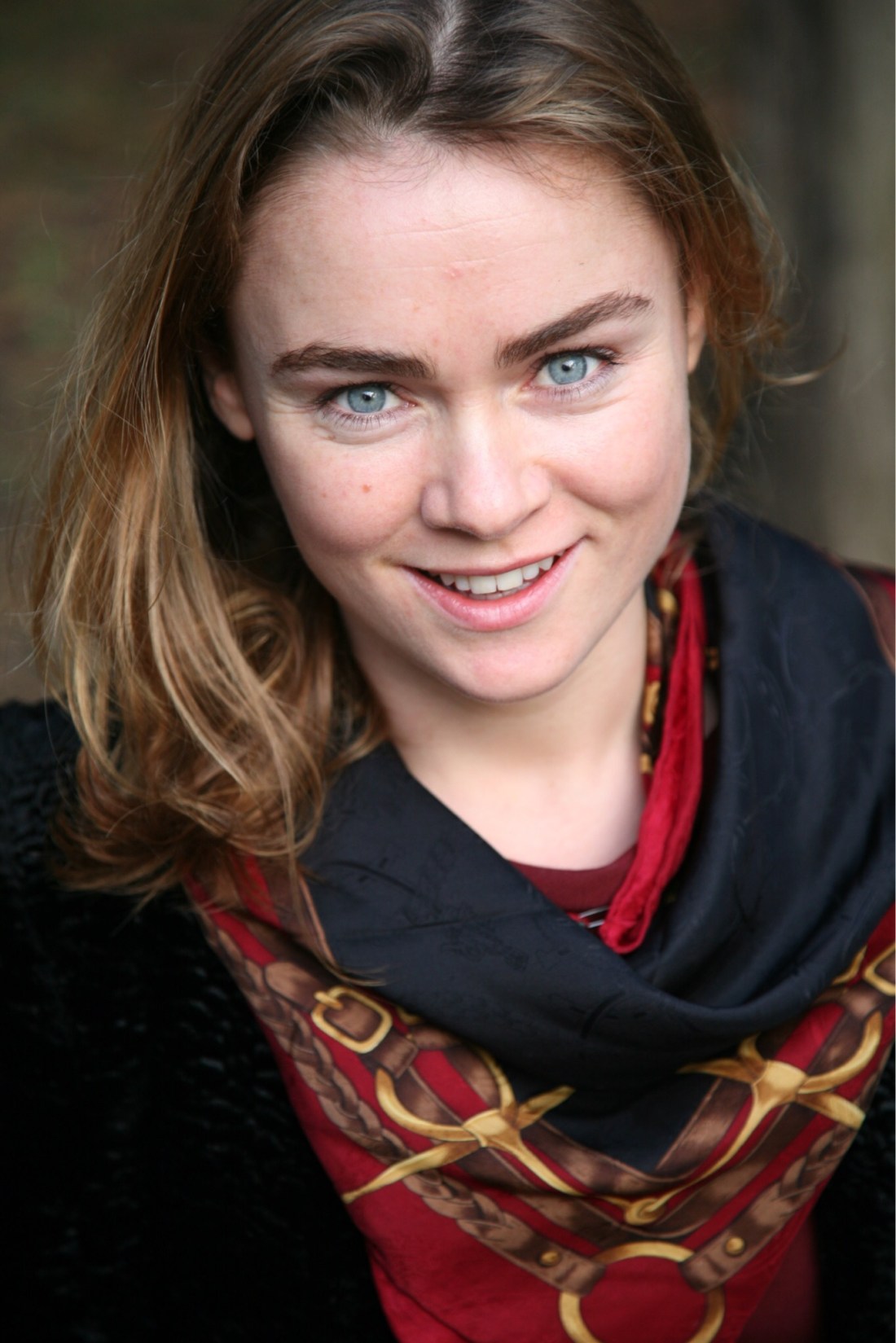
original 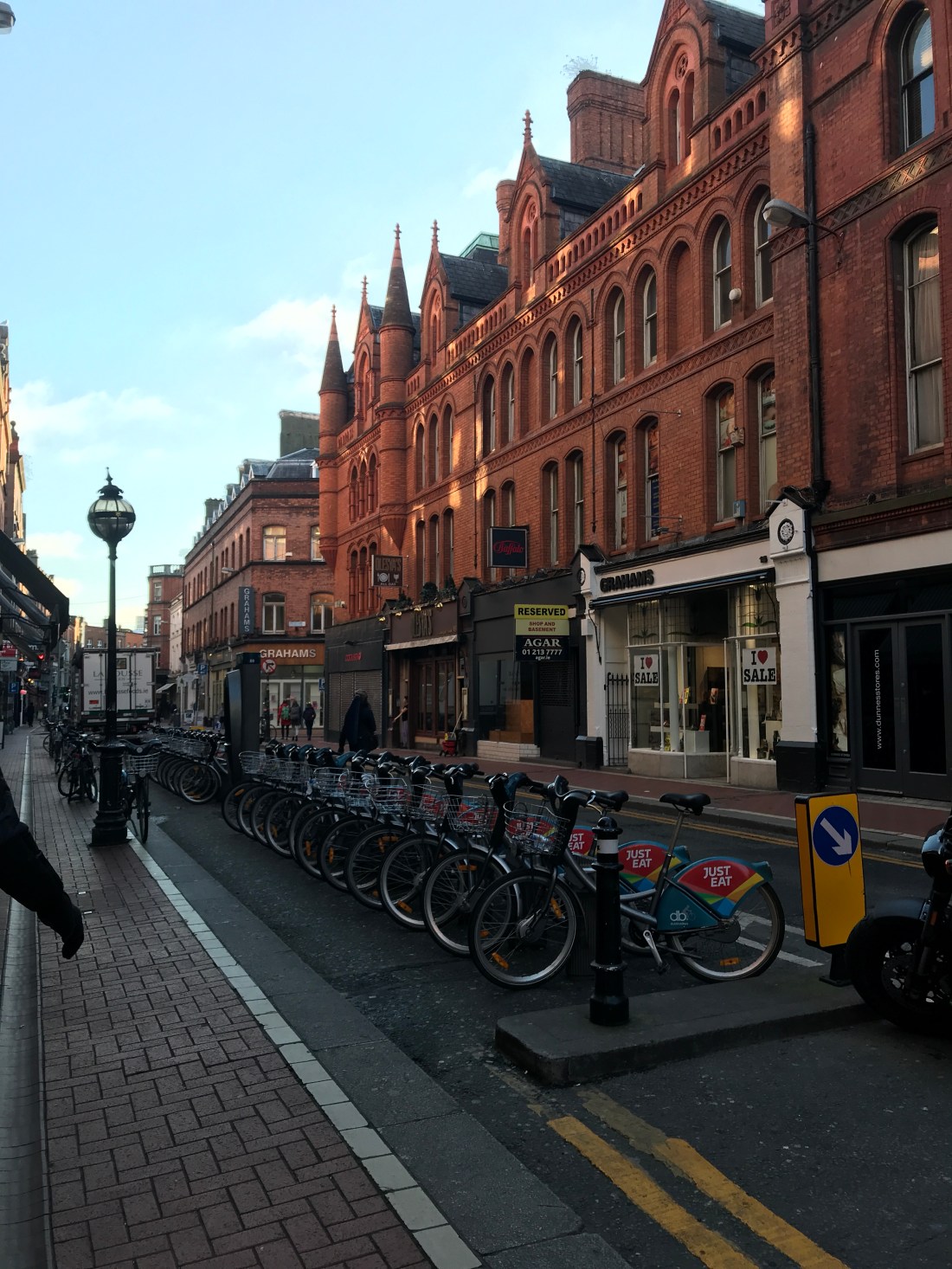
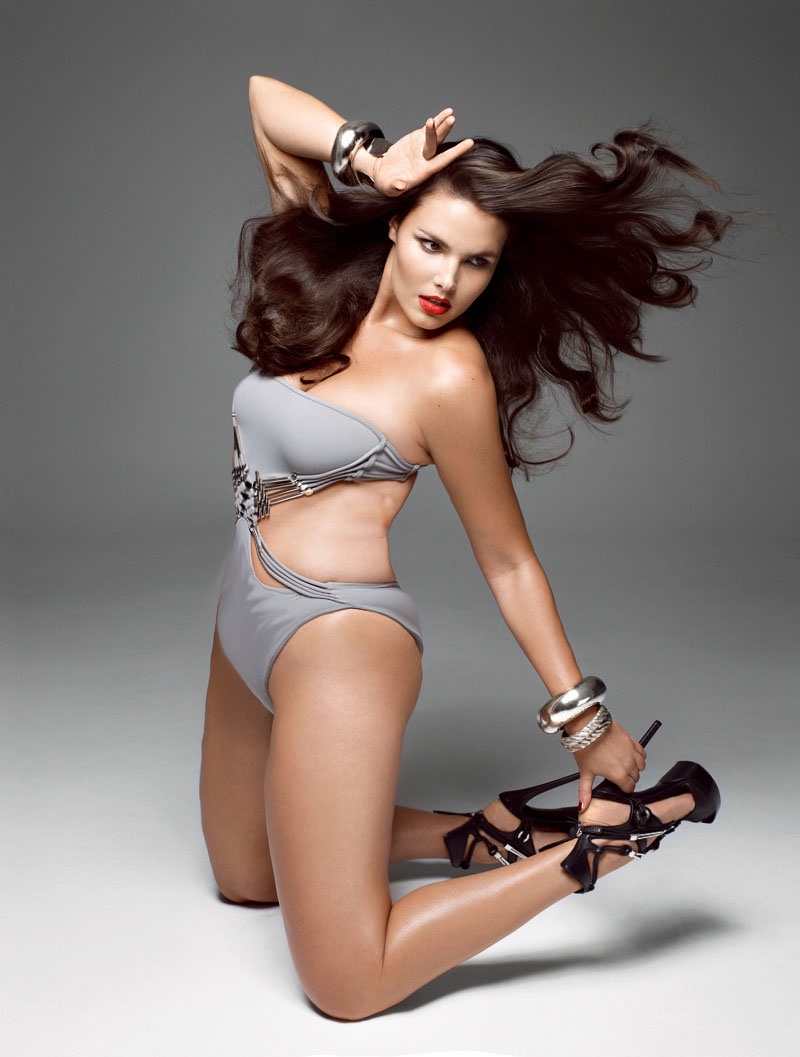
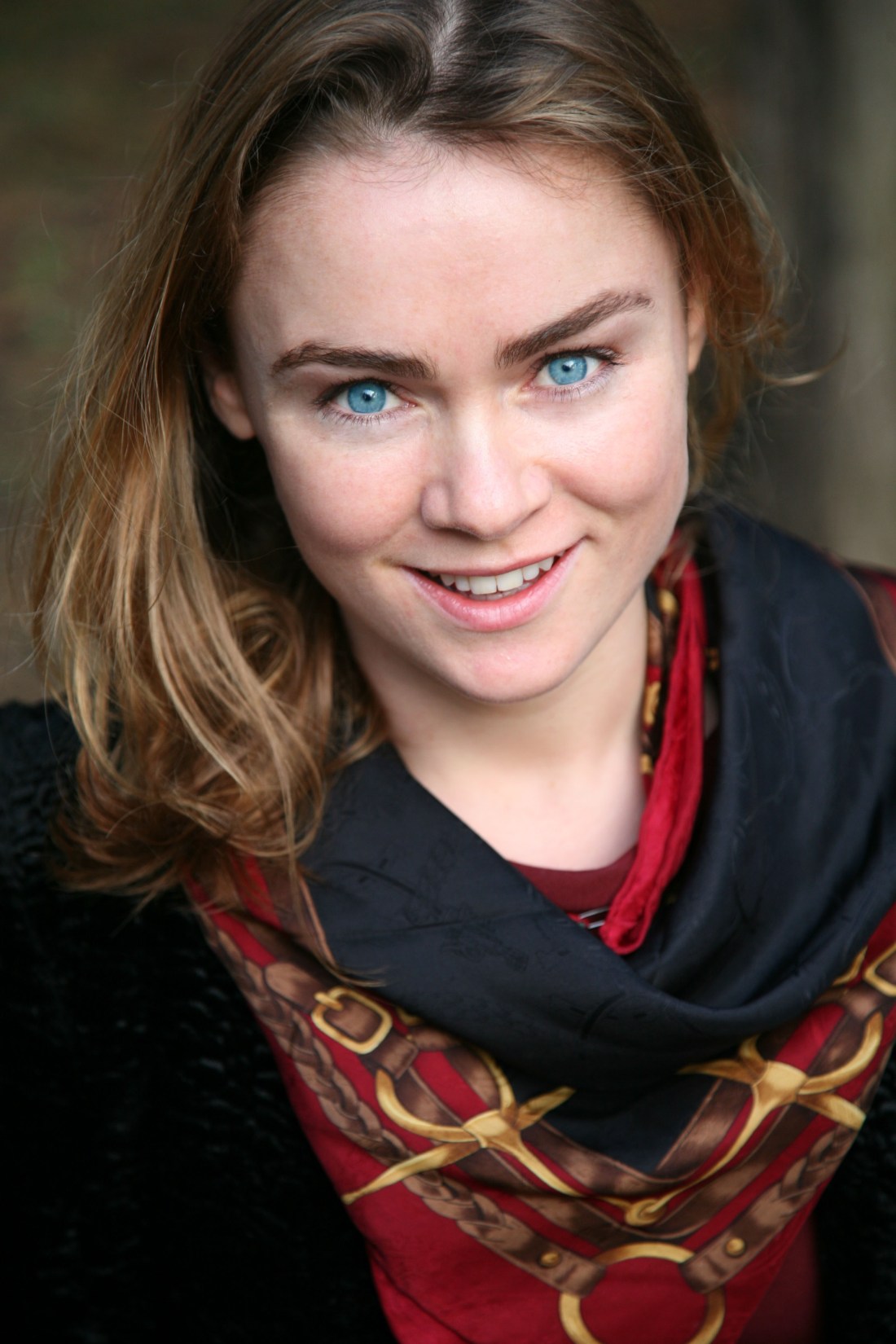
Edited 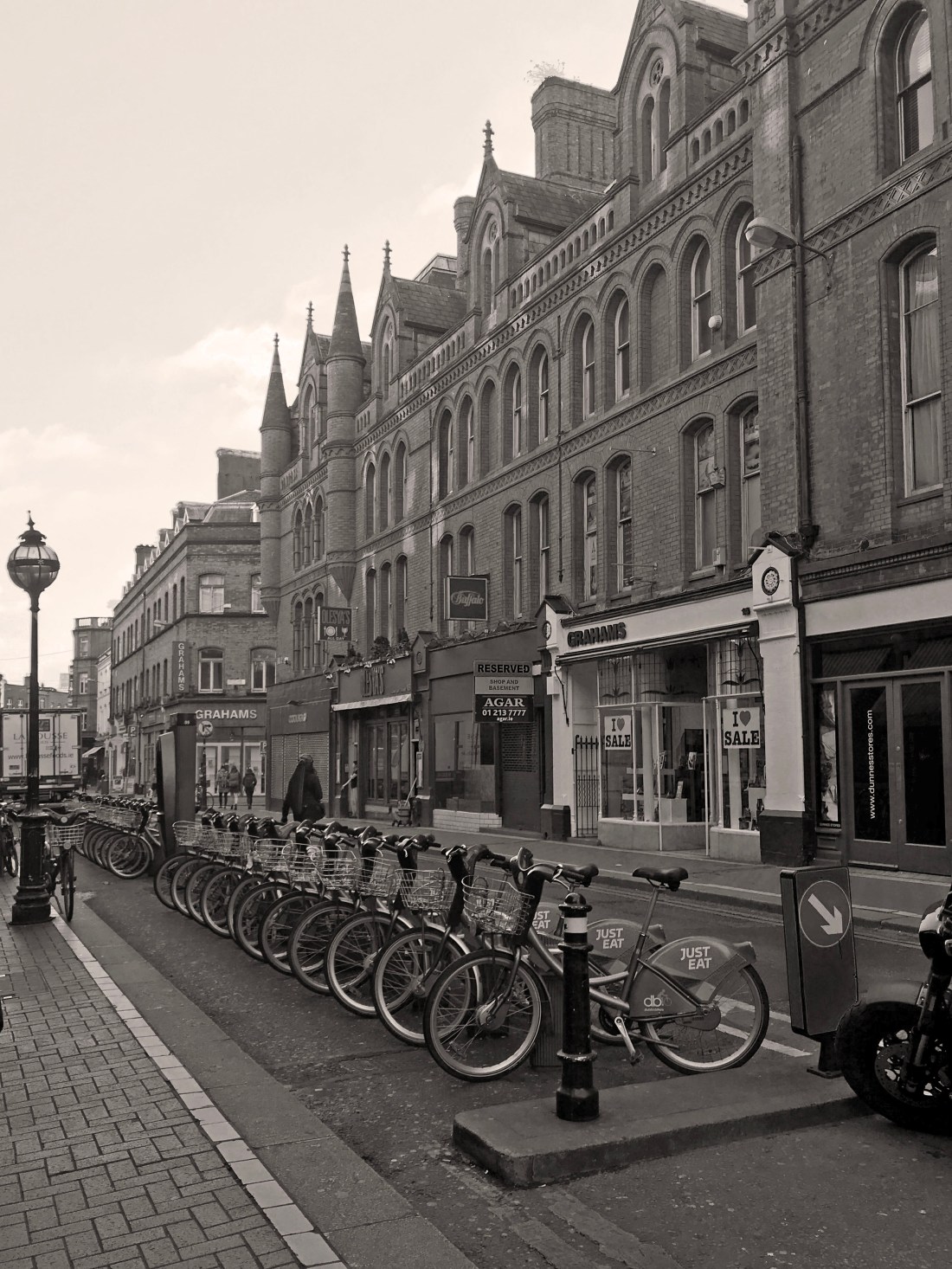
original
Edited
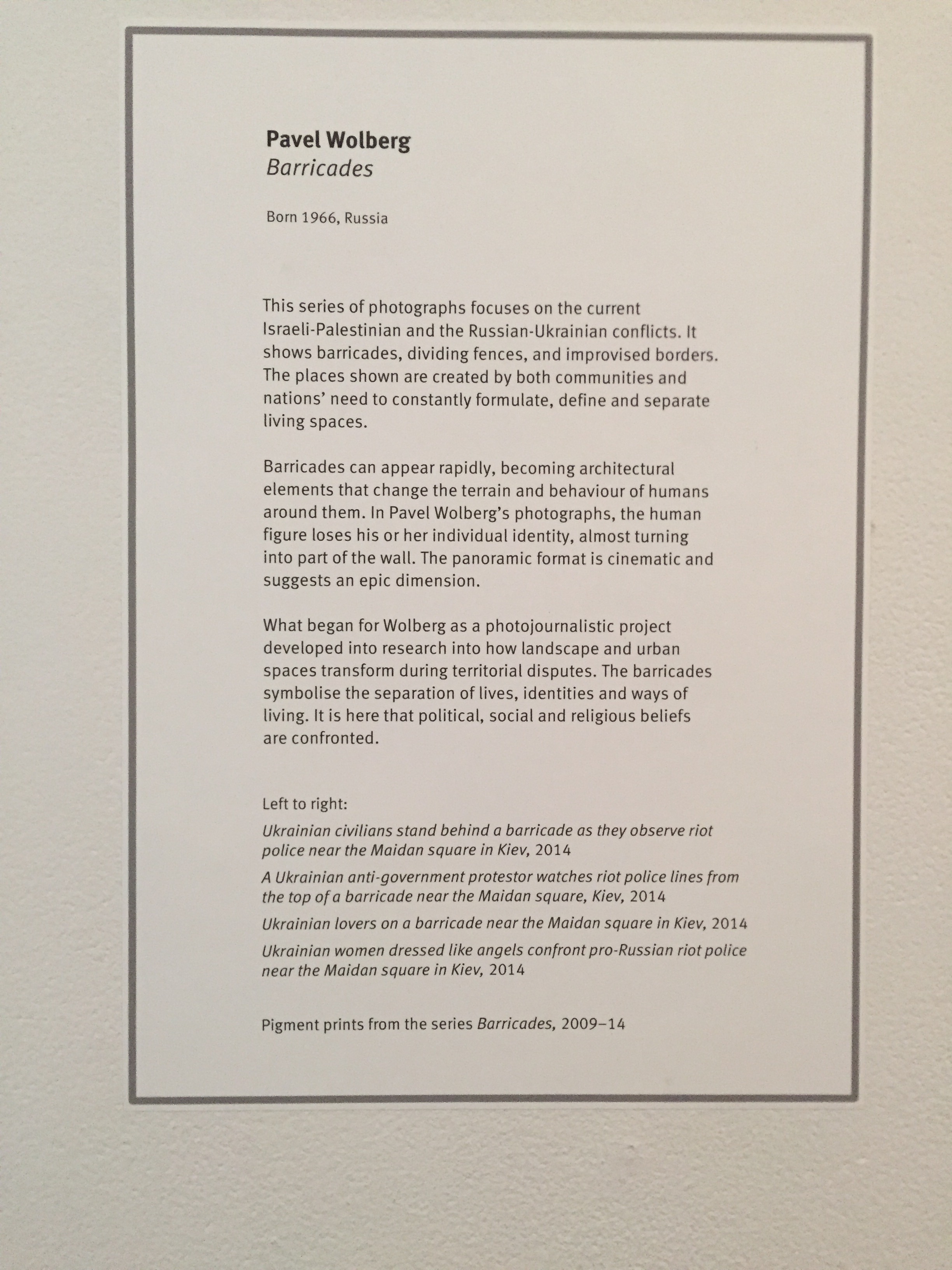
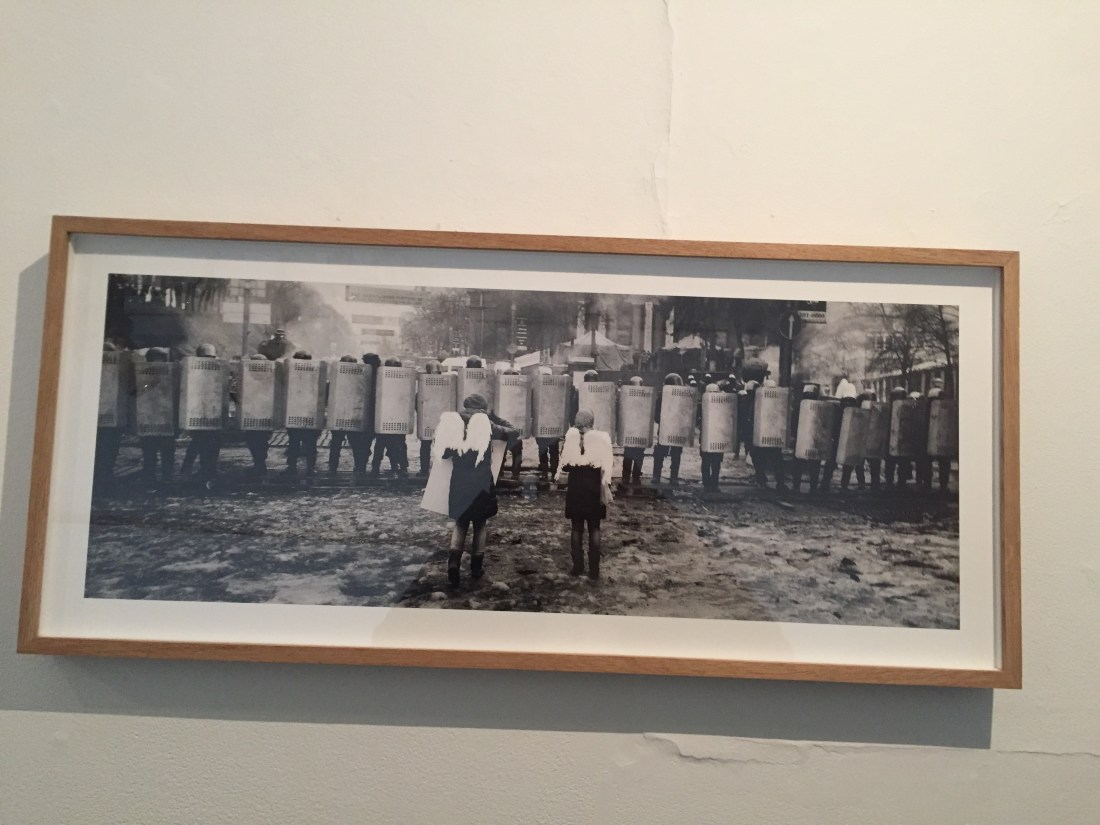
Pavel Wolberg, is a Russian photographer born in 1966. In particular, this blurb will focus on his Barricades project based on conflict in both Ukrainian-Russian aspect and Palestinian- Israeli aspect. in specific , i chose a picture from his work that was taken in the Ukraine, where women were dressed as angels, from the back of them just viewing their toy wings, in front of a barrier of Russian riot police holding up metal shields. This photograph is so raw and brutal based on this civilian shots as these people are doing nothing , they have no weapons , they’re just walking in the Maiden Square of Kiev and yet they are being treated like a threat. Wolberg is focusing mainly on how these versions of operation are causing mass destruction and tragedy within a country. his work reflects how humans can lose their identity and individuality bad on conflict an yet they may not have done nothing to feed this conflict except be a insignificant fish in a sea of political sharks.
Photography is the blending of art in the form of painting and technology, pixels are the artists paint and the camera the inventors tool, together creating the beauty that is a photograph. This essay is a breakdown of a photographer and his work , in this cases it focuses on the photojournalist: Stanley Greene and his efforts, interest and talent in the world of photography and he believe photography should be seen.
Stanley Greene was African-American, who was born in Valentine’s Day, 14th of February 1949 , in Brooklyn, New York . He grew up in New York , in what some might consider a performing arts or theater family, this being said because his parents both worked in the dramatic arts industry ,therefore it could be argued that this gave him his love for the creative industry.
Greene throughout his childhood and early teenage years wanted to be a painter, but this career path altered slightly as he got older leading him to photography instead.
Moreover, as a teenager Greene, was a member of the Black Panther which was a civil rights movement for the African Americans starting in the 1950s right through to the early 1970s , he also was anti Vietnam war activist. He studied at the school of visual arts in New York and then went on to study Image works in Cambridge , Massachusetts. Greene started off his photography career taking photograph of models for the fashion industry and taking photograph for magazine issues . It was at this time in his life, he met someone who would change the course of his future forever.Greene’s then girlfriend was the assistant to Eugene Smith. Eugene Smith altered the mindset of photography in Greene. Smith lead Greene into the world of photojournalism and he never looked back.
Greene is widely believed to be a story teller rather than a photographer , he tells the story that people are no longer able to tell, he does this by taking detailed, untouched photographs which gives each photograph a voice.
In 1986 , Greene made a decisive move to Europe which at this time was a hectic and eventful place to be living , to be precise he move to Paris , France. Unintentionally, Greene photographed the falling of the Berlin Wall , which in turn made him the most sought photographer at that time. He began working for Agent Vu photo agency. When working on a story for them he found himself trapped in the White House , in Moscow, when an attempt on the then President Yeltsin was made. His life flashed before his eyes as he was in the brink of death. However , this became a recurring case for Greene, he chose a job that meant risking his life to tell the story of others across the globe.
Greene has well documented and covered many war torn areas across the world, risking his life and building his incredible career each time he took a photograph.
Furthermore, for his, without a doubt , outstanding photojournalism, he has won several awards and earned many grants for his projects , to be specific in 2013 he was given the Aftermath Grant for The Rise of Islam in Caucasus project that he did. It could be discussed that Greene felt the necessity to cover world press, he was more than the average photojournalist, Greene was conflict photographer and in that he was one of fairly few conflict photographers that were African American. He gave his own definition to conflict photography. His work , could be viewed to some people as impressionistic, or as one might say , natural, incorrupt by artificial add-ons and left raw to relate truthful photography.
However, his work , regardless of opinion is pure honesty on paper, whether or not it was too graphic was up to the person viewing it to decide. Many news broadcasters and photo agency’s couldn’t publicize his photographs because the reality of it was too brutal and harsh to show the world, but it would never prevent the photograph from being made or taken by him. He showed the world , in the most real way, what war and conflict was , he didn’t sugar coat it or hide parts of it he went into it and did not lie , he was in areas such as Georgia, Afghanistan , Iraq and Chechnya where he was being bombed at with other photojournalist by the Russians, but still never seized to take the photographs no matter how difficult the situation or scenario.
Greene was one of the founding members of the NOOR agency which was not just for photographers or journalists , it was about documenting , investigating and knowing the world and showing it off. His agency was launched in 2007 and is one of the top three agencies for photojournalism , it continues to live on even though he is no longer around .
Greene has made a substantial amount of books, in particular we are going to look at his autobiography; Black Passport (2009) Greene,S. In his autobiography, he discusses how he felt in countries that were in such tragedy and catastrophe when he was covering them , some of these countries can be listen; Rwanda, Chechnya ( which is brought up a lot when he spoke about his work), Haiti and New Orleans. He expressed his time there candidly even though he was describing extreme violence and affliction. (1) Chapters of the book are not only in relation to his work but to him personally , in sections of his life , such as his marriages and the loves of his life and how all of them shaped him as a person.
In particular, photographs I would believe are the most powerful are the ones taken in Chechnya. Where Greene did not just show the horrors and devastation of war. Greene took photographs that were contrasting in the sense that he would show a family or a boy in there unbroken home, in Chechnya showing that people were still there , reflecting that just because the outside world was scared to even enter that country because it was what the news reporters called either war torn or dangerous , which no doubt it was , there were people there he showed that people were still stuck there and trying to live as typically and normally as possible. This in my opinion was the most powerful photographs as the simple urban life has been destroyed once outside the front door.(3)
In my opinion, his style showed the purest version of what was going on in the different places of the world. For me, Greene showed people’s suffering and not his own , and this is why his work was so easy to read , understand . Also his own trauma , I would think, fueled him to continue being a conflict photographer. Chechnya is only one of his incredible bodies of work, but his work in Aleppo, Afghanistan, creates such a deep feeling inside of tragedy. The way he took photographs they just give a sense of as if you are there, as if you can step into the photograph and be in the space. I found this incredible, as he had this ability to make you feel as if you were experiencing the trauma and fear. (Appendix A)
Moreover, Greene was a mentor to many photographers, both experienced and inexperienced, they followed his work. Although honored by this , he never promoted his choices in certain areas of his career, for example, he put his life on the line when deciding to be a devoted conflict photographer but always discouraged other photographers to follow that. ‘ I’m bombarded by young photographers who ask me how to become a conflict photographer ‘ Greene,S. (2009) Black Passport , Paris , Paris textual Publisher, explaining the hardship of being a conflict photographer is next to impossible. Greene suffers post traumatic stress disorder multiple times after covering stories and it could be argued he did not believe in burdening others which such difficulties. ‘ If they persist, I tell the, about the consequences, I tell them there is no glory ‘ Greene,S. (2009) Black Passport, Paris , Paris Textuel publisher.
Greene, unfortunately was diagnosed with Liver cancer and underwent treatment until he passed away in May 2017 at the age of 68. Although he had cancer and his health was failing him and his life deteriorating before him , one might say Greene decided to accelerate his working timeline in order to finish work before life finished him , basically meaning he still continued to work and cover stories, in particular , he along with one of his colleagues Maria Turchenkova , went on to do their project which was based on the 100 year anniversary since the Russian Revolution. (2)
In conclusion, the reason this essay focuses on Stanley Greene, is because his work is like no other because of his brutally honest way of seeing the world through a lens and how he never let a barrier of danger or fear stop him from doing what he loved and what he was good at. His humanitarianism deserved never ending awards. Although he is no longer with us , his work actors the world should never be forgotten and should be highlighted for its bravery and uniqueness. Greene was more than a photographer, he was a teacher and preacher without needing a voice. His photographs should be manifested across the globe in hope to prevent the possibility of sorrow and tragedy.
Work Cited
(1) https://lens.blogs.nytimes.com/2017/05/19/stanley-greene-teller-of-uncomfortable-truths-dies-at-68/
(2) https://www.nytimes.com/2017/05/19/business/media/stanley-greene-dead-war-photographer.html
(3) https://m.youtube.com/watch?v=USzWuVjK-nY
Bibliography
Greene,S (2009) Black Passport , Paris , Paris Textuel Publishers
Appendices
a) Appendix A , Aleppo(2013) https://www.nytimes.com/2017/05/19/business/media/stanley-greene-dead-war-photographer.html
Artificial
Dusk/ dawn

tungsten

Natural

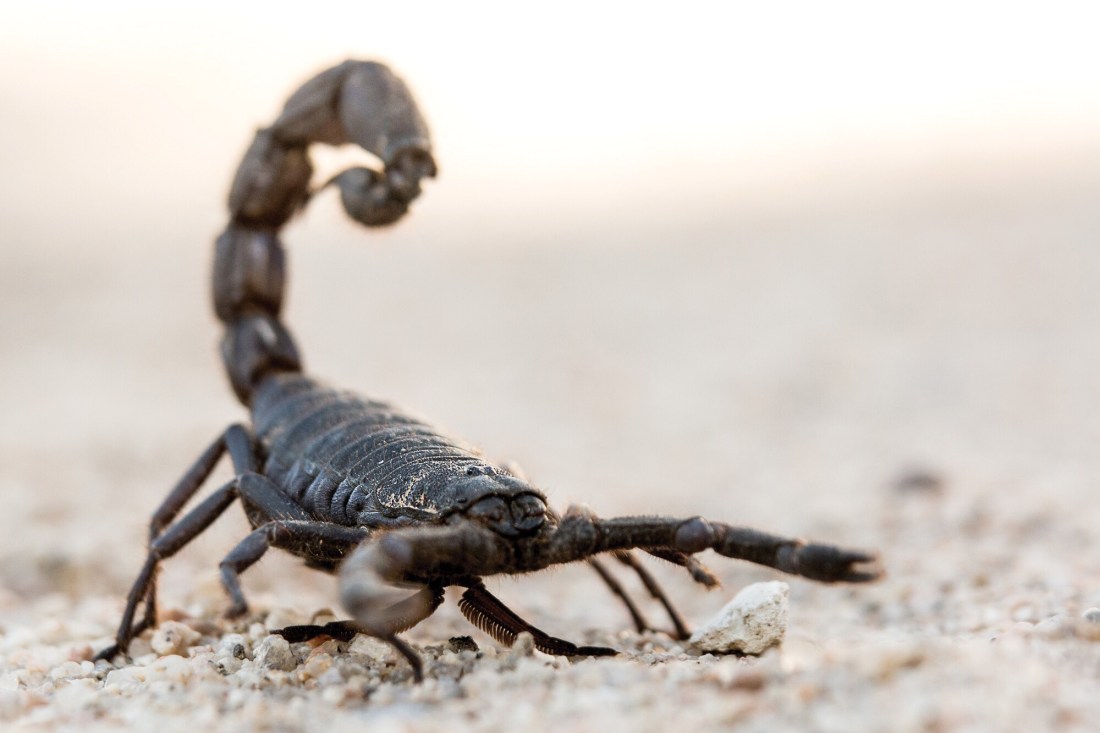
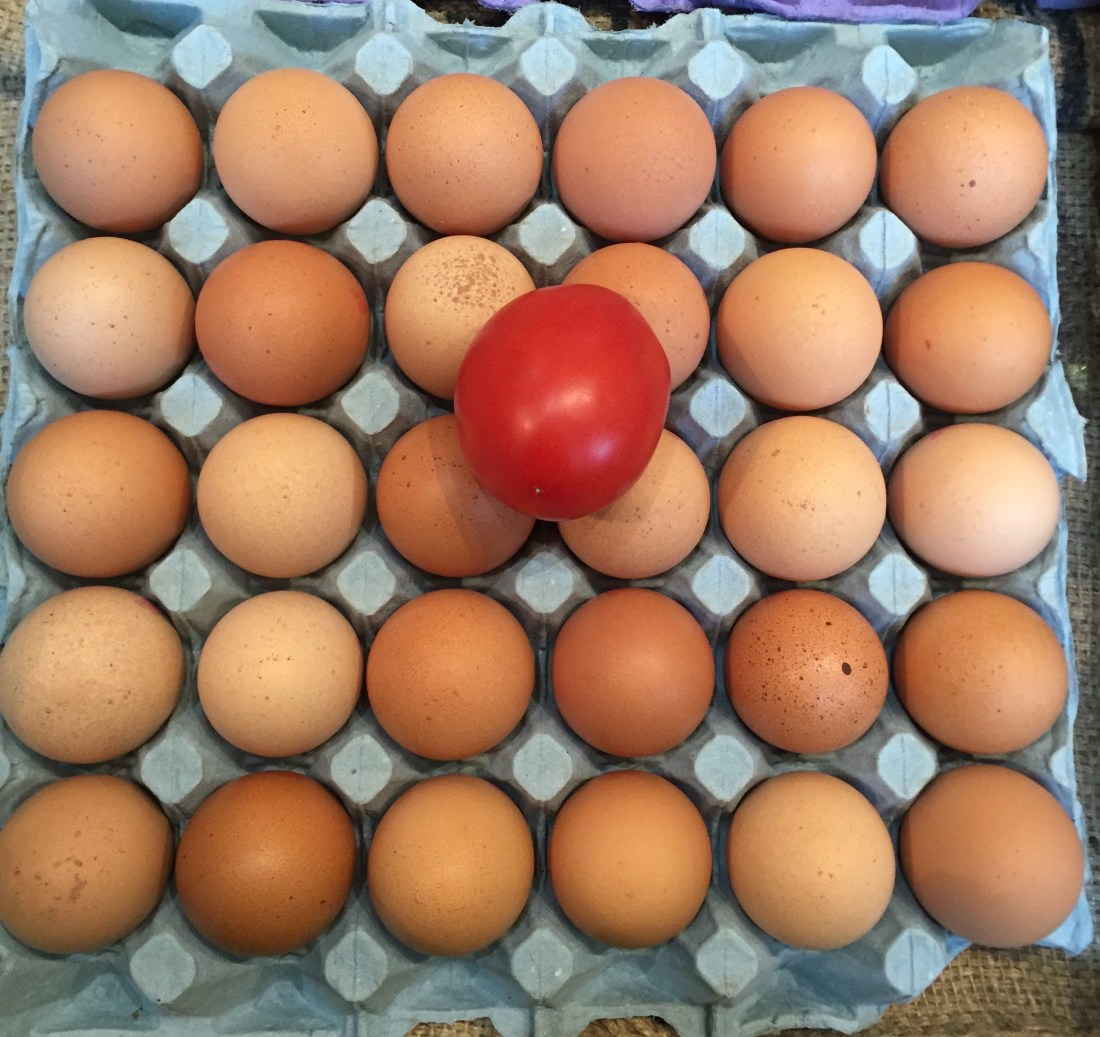
Pattern
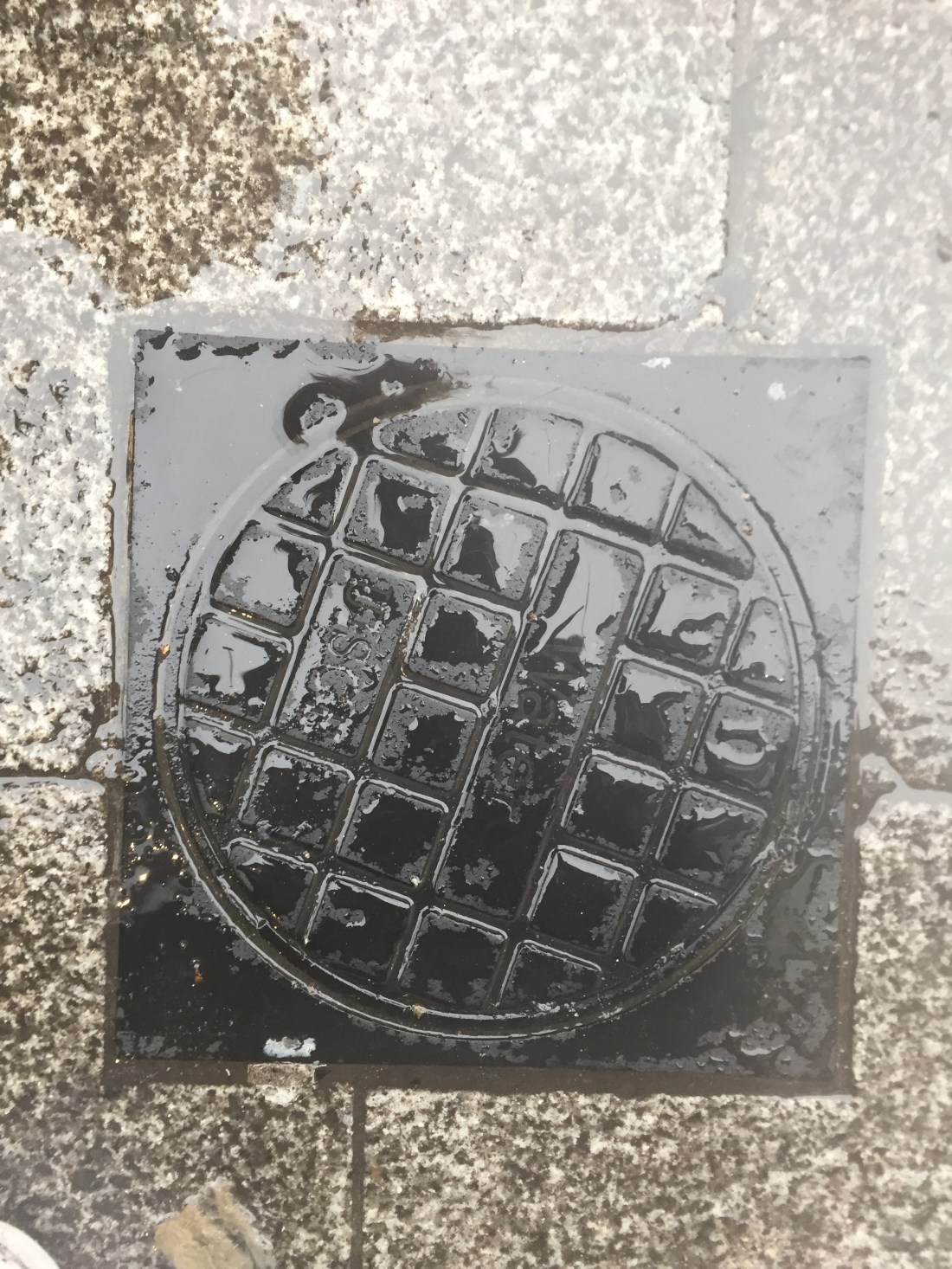
Texture
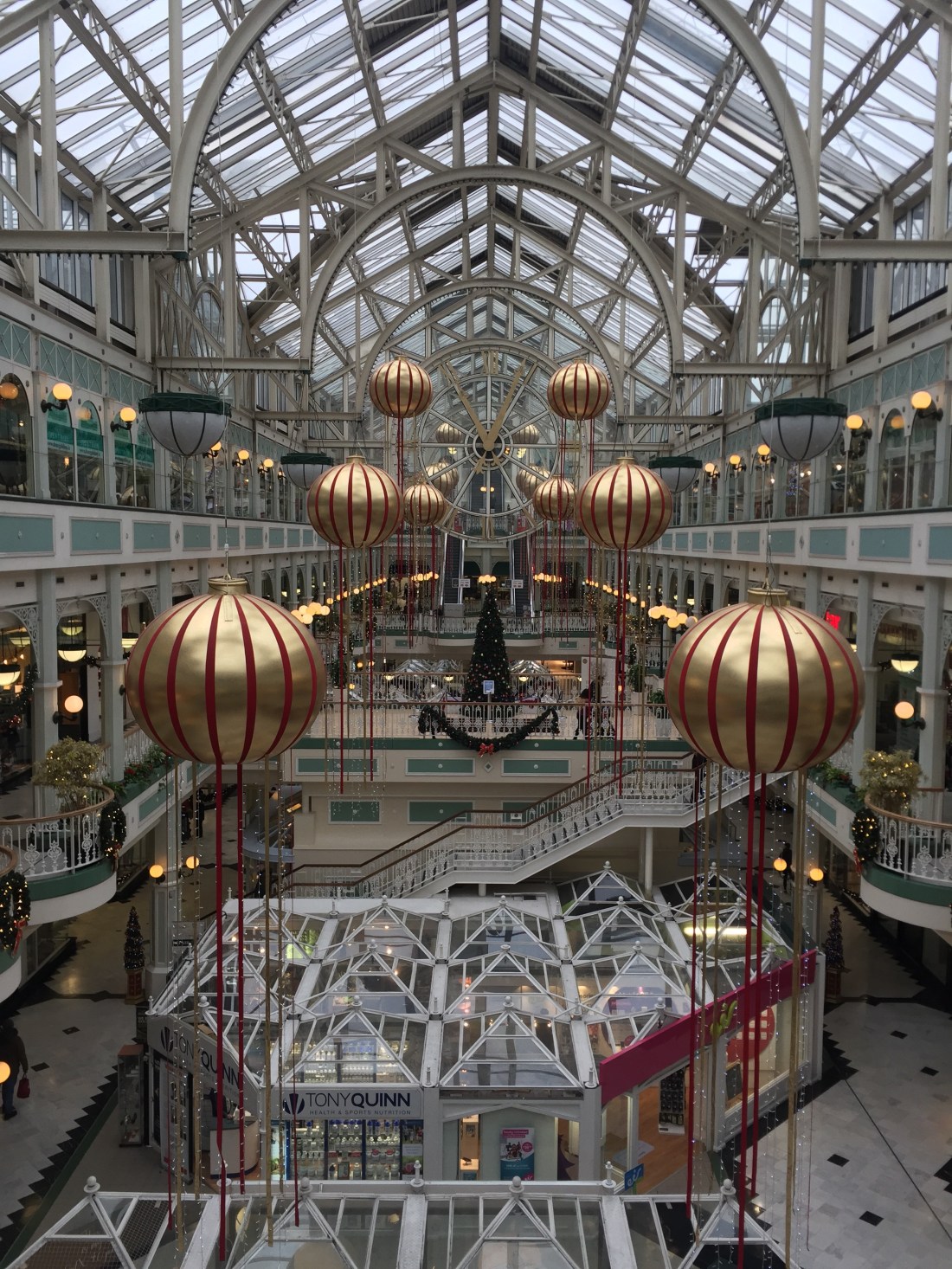
Symmetry
Space
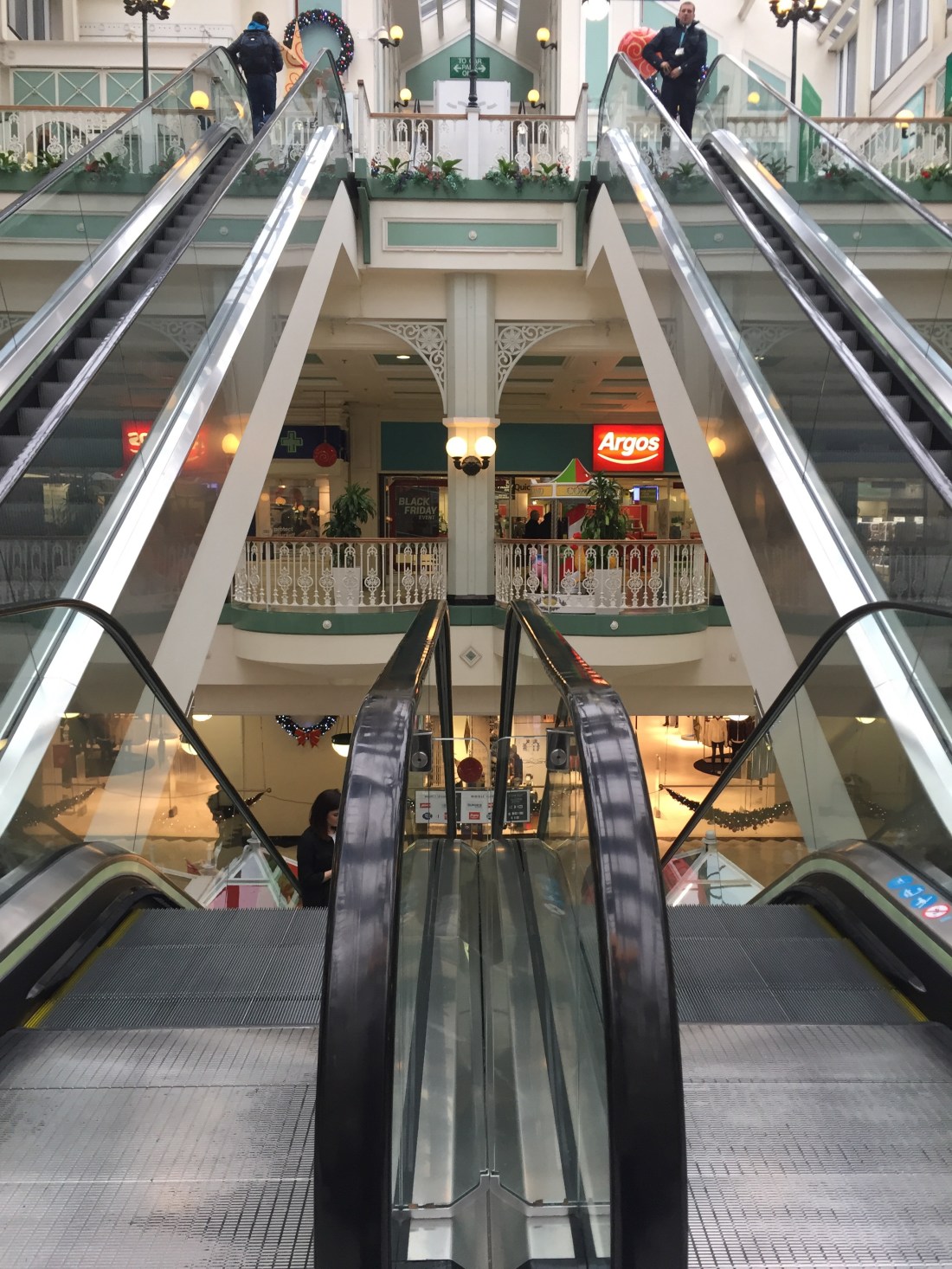
lines
Color
Perspective
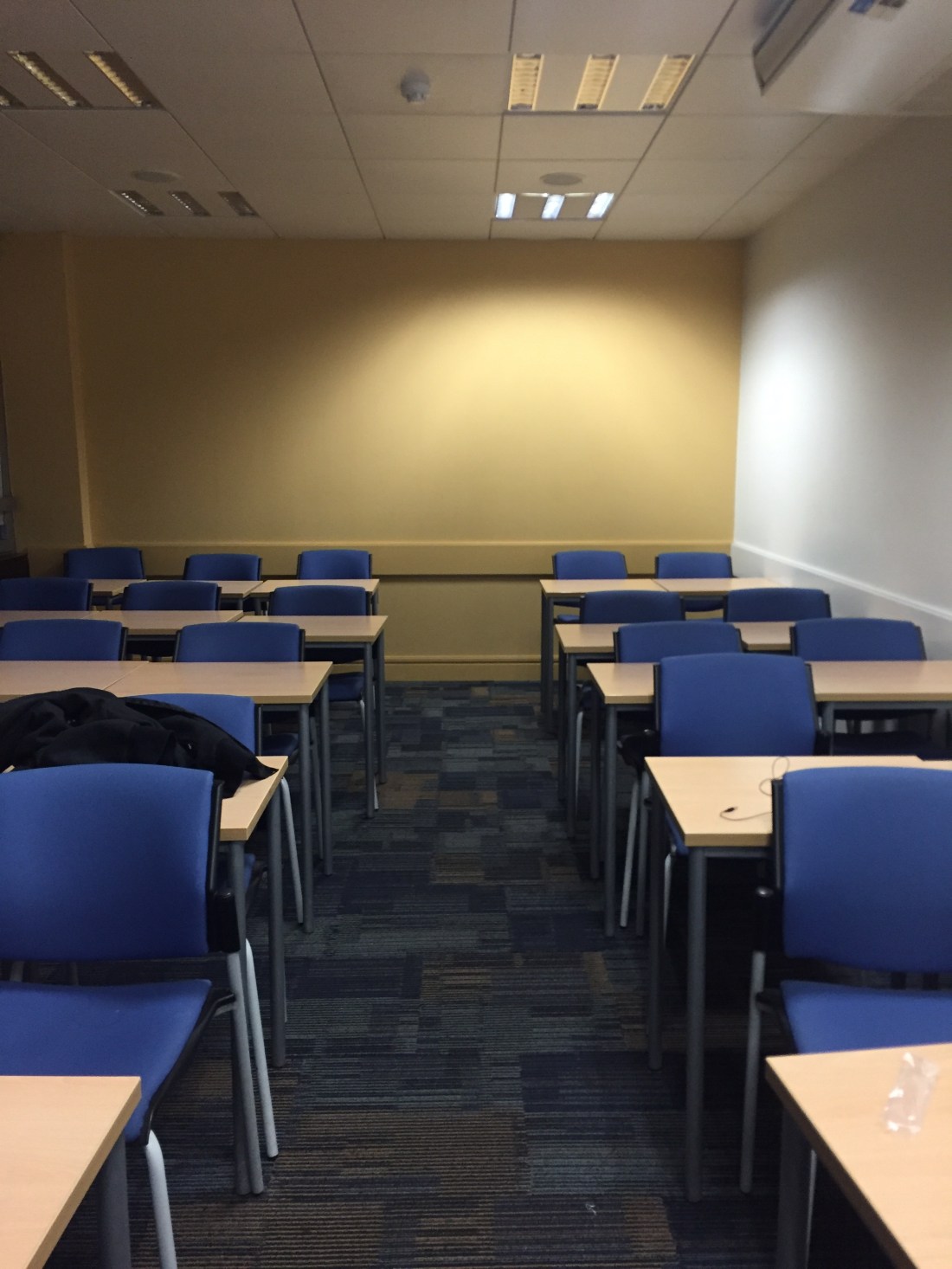
Depth of field
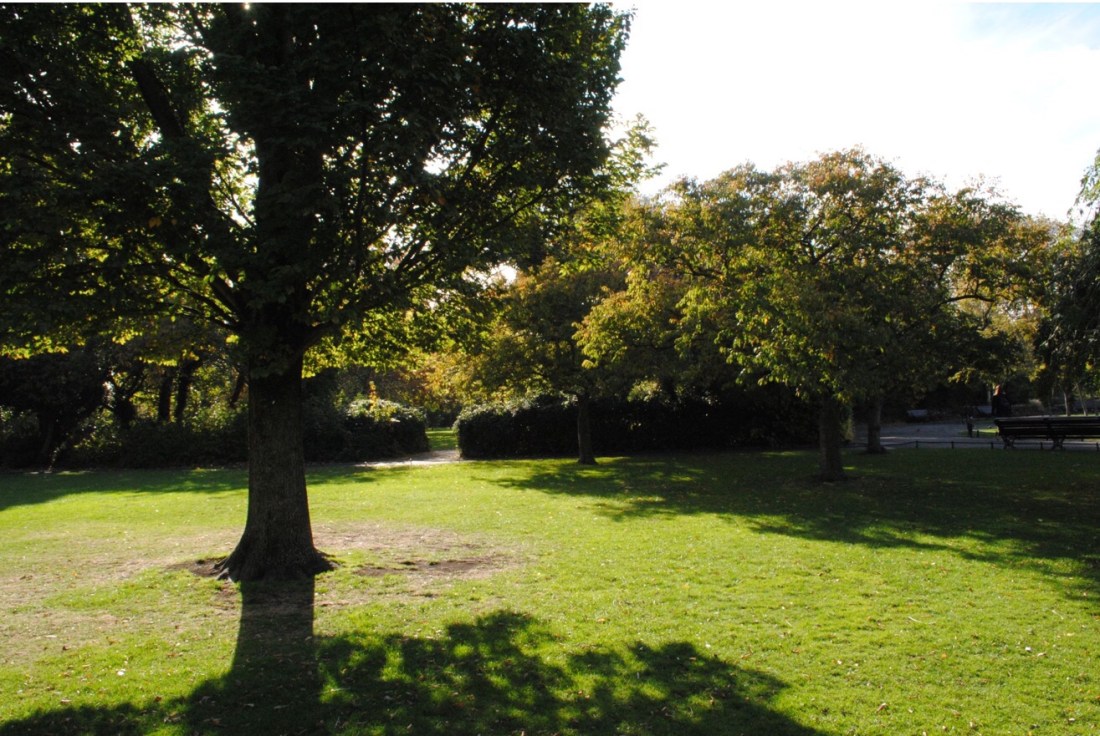
Frame within a frame

Out of 95 photographers only 15 are women and only 10 are not white .
Patrick Zachmann is the photographer I have chosen to analyze because he fell into photography as a way of finding his identity and his memories. Zachmann is French photographer who joined a magnum in 1990. Prior to discovering himself he tried to find cultural identities of other countries or people in certain positions of authority in countries where authority is very disregarded and over run.
By finding other people’s identity for them when they couldn’t he found himself. Himself being a French Jewish man who has no memories of his life so he tries to reconstruct them through other people. When he was photographing Jewish identities he ended up creating a chapter about his family. This was later made into a short film in the late 90’s. He also spent some time following immigrants in France and how they adapted their identity to what was the French way of living and documented how they changed and became more French in their character from when they arrived.
Many people don’t remember their past and therefore now a days they take photos to ensure they never forget but this was not Zachmann’s case, so by helping others capture their memories he was able to fuel his work to continue ring a photographer. He spent some time creating a diary of his fathers memories ,or that’s how he perceived it which expresses disappearances of traces of memories and people ,and how photography can actually shape an entirely different image in your head that is not the actual memory but what photography has made you think it is. It’s for these reasons that I think he is an inspiring photographer and that his work is so raw and beautiful for being so natural.
I feel very privileged to be from a country that is so rich in culture and history . Portugal once owned half the world and was also one of the largest and longest lived empires ever; with a period of over 6 centuries of discoveries and colonizing countries. Portugal’s monasteries, monuments, buildings and stories are some of the oldest and most historic to this day. The capital; Lisbon, is the second oldest city in Europe and for all these reasons, I wish to make it my subject for my photography book. Portugal is not remotely close to being a big county and on the scales of cities in this world, Lisbon, is also not considered a big city, however, thanks to Portugal and Lisbon in particular, many countries in this world were discovered and rose in civilization. Unfortunately, Portugal is dismissed by many nations and people , it is mistaken for another province of Spain which is it’s only neighboring country. Portugal was under ruling of a monarchy until the early 1900’s and then was under communist dictatorship until 1975 when the revolution occurred and we became a republic.
I propose taking photograph’s of the most unique and most historically relevant castles, monasteries, churches and gardens in Lisbon. I would like to highlight the older districts of Lisbon such as Alfama which is the first hill in the 8 hills that make up Lisbon. Alfama has one of the oldest castles :São Jorge, in the world as well as some of longest standing monasteries ever like Jeronimos . My target with these photograph’s is not only to honor my country in its courage and bravery to discover so much of our world and its creative architecture over time in Lisbon but also to expand the knowledge of my piers and young millennials as so many disregard this mighty little country and how it’s history influenced other nations history too. I also would like for Portuguese people to see these photograph’s as I believe it will bring great pride in them about their nation and their heritage.
If granted this project will be split into three parts like a story with a beginning, a middle and an end this is also how I plan to split Lisbon so that I can focus on different districts through a chronological and historical time line of the city. This will require three weekend trips which I estimate to be during December and January where I will follow a strict itinerary for each of the three parts. For each photograph I will add a brief summary of the historical relevance and value to Lisbon and Portugal but in addition I will also write how I felt and the atmosphere and ambiance that each building gives to me as a native Portuguese and draw comparisons and differences to my half Irish heritage.
I wish to evaluate this project in two ways; technically and emotionally. I would like to see how people react to these photos and get first hand feedback of their opinions and how the photos made them feel. Then I would like to analyze my project from a technical camera aspect and how my work could be done differently but also how it makes me feel when I hear different opinions from people who are not Portuguese in comparisons to people who are.
 joannamariacorreiadbs